What Happens When Families Do Math Together?
What we learned from sending math text messages to middle school families twice a week



When we think about how to keep students engaged in math, the conversation typically centers on what happens in the classroom. However, there’s another source of motivation and support that often goes untapped: students’ own families.
Caregivers are eager to support their students’ math learning, but they don’t always know how to do so. By middle school, many families aren’t sure what’s happening in class or how to engage with their children around math. The Tangle & Thrive Team wanted to change that. We set out to explore the effectiveness of sending brief math activities via text, with the goal of building connections between caregivers and students around math and supporting students’ learning outside the classroom.
How It Worked
We partnered with Mr. Becker, a math teacher at Ronan Middle School in Montana, who helped recruit families from his classroom to participate and served as our main point of contact throughout the program.
Each activity we sent to families was aligned to students’ math curriculum (Core Connections). We transformed the problems that Mr. Becker had already planned to assign as optional homework into process-oriented, hands-on activities. Families provided information about their child’s interests, from sports teams and athletes to favorite hobbies, which we used to personalize the activities - for example, a problem about ratios might involve a student’s favorite sports team, or a scaling activity might have them design a logo of their choice for a jumbotron.
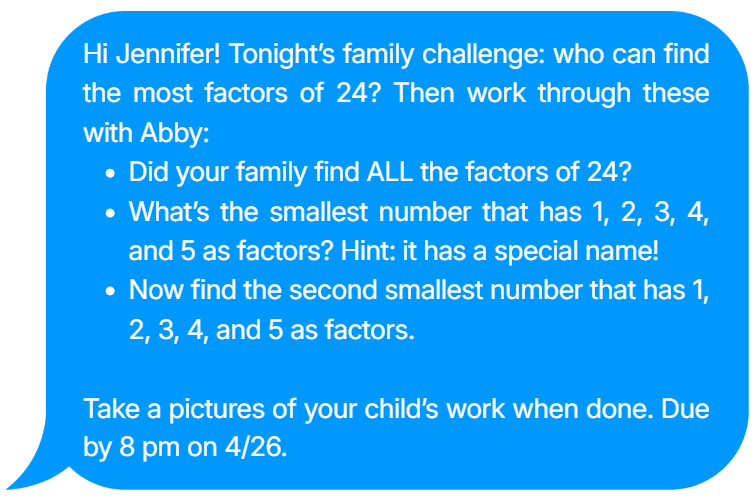
Figure 1. Sample text messages sent to caregivers.
Building the Platform
Getting the text messages out the door was more complicated than it sounds. We started with SimpleTexting, a bulk SMS platform built for mass messaging, but it wasn't designed for the kind of personalized, two-way conversations we needed. That’s where Liberate Labs came in. We partnered with them to build a flow-based system: the system sent prompts to families, waited for a reply, nudged when needed, and used an AI router to decide what to send next. The router evaluated each family’s reply and chose whether to send a follow-up message or escalate the conversation to needing manual review and response from our team.
Improvements in Student and Family Engagement
Throughout the year, Mr. Becker regularly assigned extension problems (additional on-unit work) and extra practice problems (spiral review from previous units) as optional homework. Before the program, only 50% of students completed the extension problems and just 10% completed the extra practice.
During the program, we were thrilled to see that those rates climbed to 88% and 84%. Extension completion nearly doubled, and extra practice completion jumped more than eightfold!
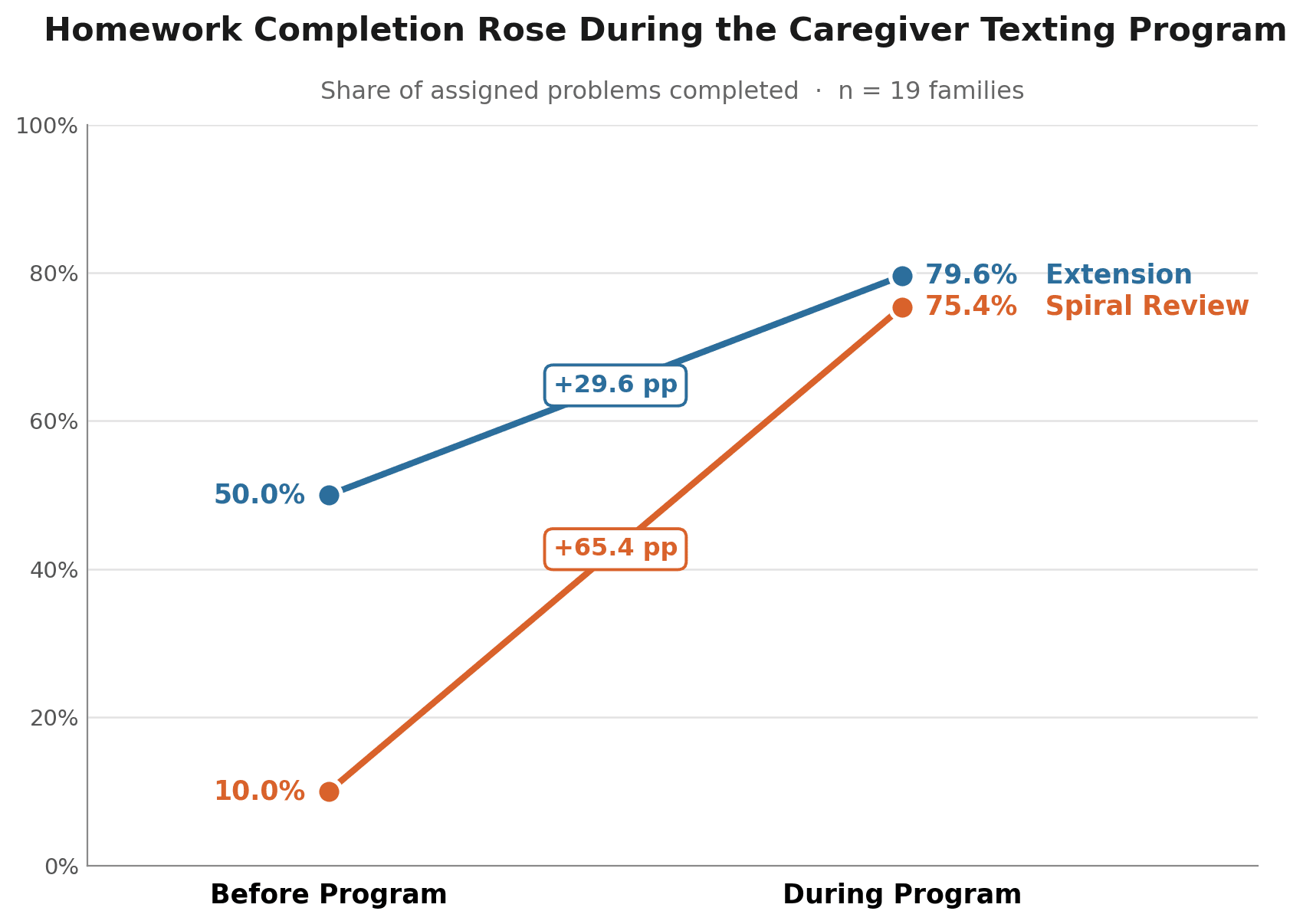
Figure 2. Homework completion rates before and during the texting program, by assignment type.
Through a math attitudes survey, we observed improvements in students’ self-efficacy in math and even improvements in parents’ own math anxiety. One student said, “I liked it better because I could do it at home and also because it just felt more connected to me if it was personalized for me.” Another noted that the problems felt different “because normally most of the problems that we do are really boring.”
Closing Reflections
Mr. Becker observed that several students came to class wanting to discuss the problems that they did with their families, compare approaches, and debate which solution they preferred, suggesting the activities prompted the kind of mathematical conversation we were hoping for.
The program also helped close a gap that tends to widen in middle school, where parent communication often fades. Mr. Becker observed that families valued being able to see what their students were working on in class, and parents certainly agreed: 78% enjoyed doing the activities with their child, and 72% said they’d recommend the program to another family.
What we observed this spring tells us how powerful a lever family engagement can be. When families are offered a specific, scaffolded way to support their students’ learning, they are excited to jump in, and both students and caregivers benefit.
Interested in bringing this program to your school or classroom? We'd love to connect! Reach out to us at mika.asaba@teachinglabstudio.com.