Educators at the Center: What a Happy Hour Revealed

Sarah Tierney
May 7, 2026
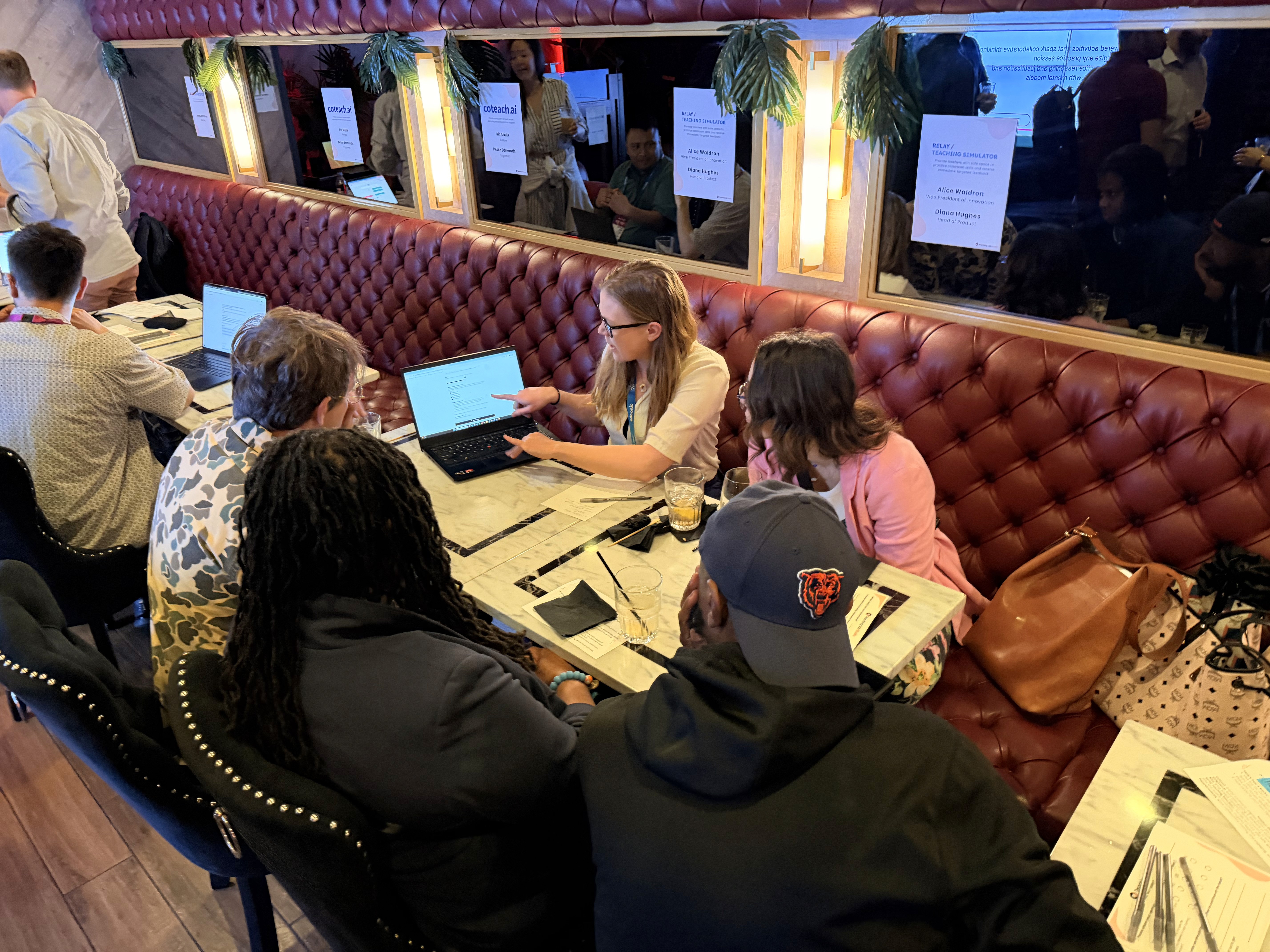
At a conference full of polished demos and bold claims about AI, our team kept asking ourselves a simple question: who is actually shaping these tools?
At this year’s ASU+GSV Summit, we hosted an Educator Happy Hour where teachers, coaches, and other school leaders sat alongside our Fellows and product leads – the people building tools at Teaching Lab Studio. Laptops were open, but there was no presentation to sit through. Educators clicked through, explored, and reacted in real time to our AI-powered educational tools, because we’ve known the answer to that question all along: it’s teachers.
Educators in the Lead
At one table, a coach walked through a prototype while a product lead took notes beside her: “This part works, but this doesn’t.” At another, a teacher compared what she was seeing on screen to the curriculum she uses every day: “Here’s what I’d need to actually use this next week.” These weren’t focus groups, but working conversations grounded in the specifics of teaching, learning, and what happens in the classroom.
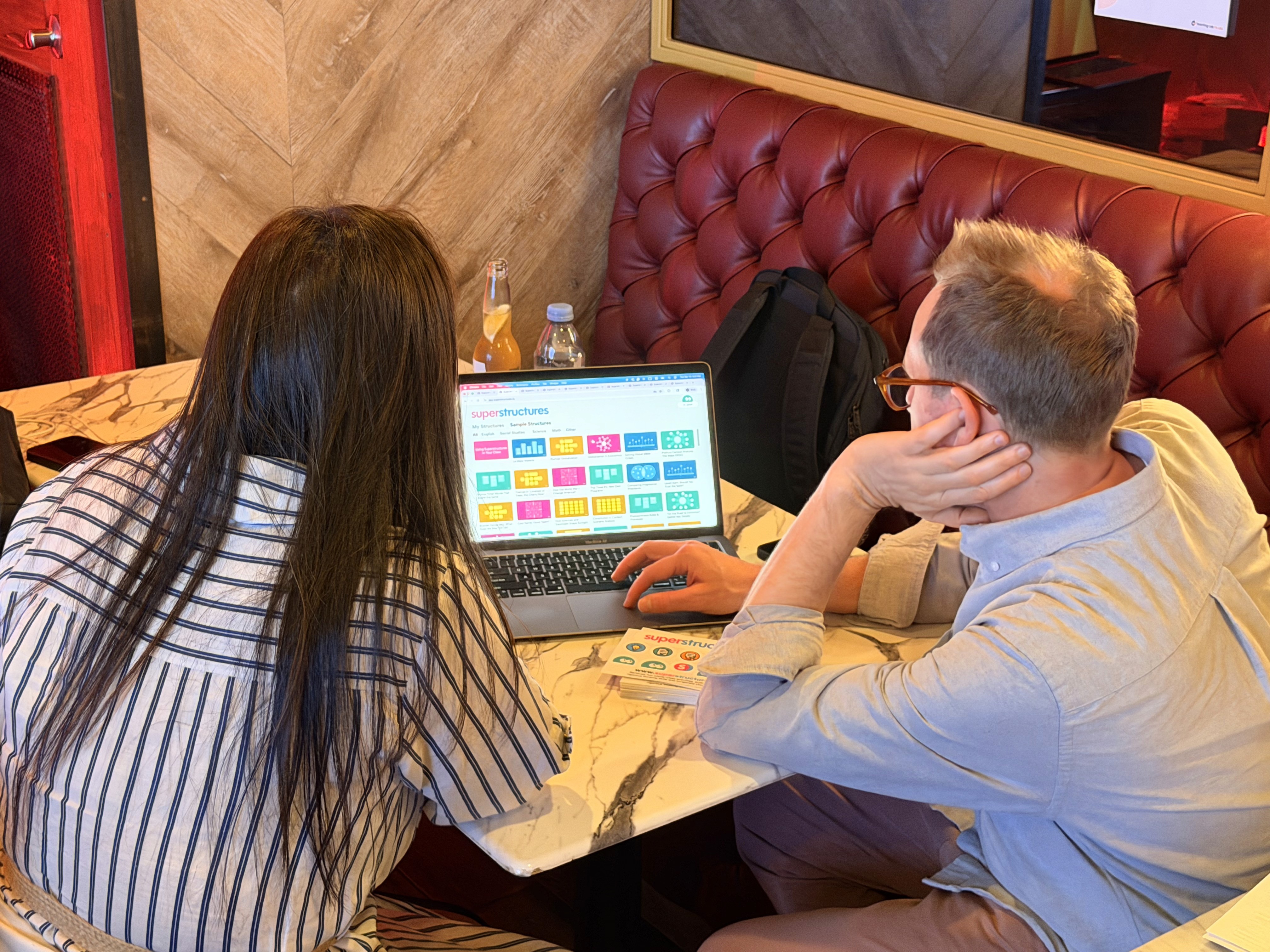
This kind of exchange is part of the approach we use at Teaching Lab Studio – what we think of as “educator in the lead” feedback cycles. We do this in a few ways:
Our Teacher Advisory Board, where educators regularly review and shape what we’re building.
Design Loops, where team members across both Teaching Lab and the Relay Graduate School of Education test early prototypes and push on the thinking behind them.
The structure we use is simple: build, test, refine, and repeat.
At ASU+GSV, we noticed a difference between our thinking and other AI companies: When and how educators are involved. We don’t consult educators at the end once something is already set, but throughout development, when those feedback cycles are most critical.
For some of the people we spoke with at the conference, this idea of involving educators from the earliest stages of a tool’s design stood out. One attendee paused and said, “Wow, that’s innovative – and where the field should be heading.”
But we’ve always thought: Isn't this where we should be starting?
Why It Matters
In much of educational technology, tools are designed at a distance from classrooms and introduced once they are largely complete. Feedback comes later, when changes are more difficult—and more expensive – to make.
The result is familiar: products that are promising in theory, but misaligned in practice.
Bringing educators in earlier shifts that dynamic. It changes not just the feedback, but the questions being asked in the first place. Instead of “Does this work?” we ask “Does this fit into the way a real classroom runs?”
That shift may sound small, but it makes all the difference in design.
We spend time with current pilot partners to get a clearer picture of how tools are showing up in real classrooms. We start new conversations with district and school leaders who are interested in working this way. And we are able to show – not just tell – how our tools at Teaching Lab Studio connect into something more coherent for educators. Teachers have always been at the center of our work, shaping the next generation of AI-powered tools.

What comes next
We’re continuing to invest in these feedback cycles – bringing more educators in earlier, tightening the feedback loop, and making it easier for people to engage in the work without stepping away from their day-to-day responsibilities.
If there’s a broader takeaway, it’s this: the future of edtech won’t be defined by better tools alone, but by who gets to shape them. And that starts with creating the space for educators to share what’s actually happening in classrooms and be treated as essential voices in the process – not just end users.
Learn More About how the Studio Showed Up at the Summit!
One of our Fellows, Gautam Thapar, was nominated for the GSV 50 Cup! Learn about Gautam's story and what led him to create EnlightenAI, an AI-powered writing assessment and feedback tool, linked here.
